Sustainable chemistry I
Vakinformatie
Sustainable chemistry is een 3 studiepuntenvak dat gedoceerd wordt door 3 proffen. Hierdoor is er niet elke week les en verschuift het lesmoment soms omwille van de beschikbaarheid ban de gastlectoren. Het deel over ionic liquids, designer safer chemicals en bioprocesses & biodegradable materials wordt gegeven door Mario Smet. Daarnaast zijn er nog 2 delen die door gastlectoren worden gegeven. Eén deel wordt gegeven door Koen Van Aken en handelt over EcoScale en sustainable chemistry. Het laatste deel wordt gegeven door de Italiaan Luigi Vaccaro en gaat over concrete voorbeelden van duurzame syntheses in de medicinale chemie.
Examenvragen
27 juni 2022
- An excited PhD student made a molecule which he thinks has good activity as an antiinflammatory agent. What possible problems do you see with the scaffold based on the principles of the design of safe chemicals? (the structure contained an allylic alcohol, terminal alkene and had the basic skeleton of a steroid)
- Why does industry often not prefer to do asymmetric synthesis in light of sustainability?
- a)Why has lignin not been used a lot in the past as a feedstock for biobased materials? Why is this changing? b) which new technologies have helped this development?
3 juni 2021
- PLA is often considered as a sustainable polymer. Explain its pro's and con's for its resource, production process and end of life use with respect to sustainability.
- Explain the pro's and con's for electrochemistry (EC) and photochemistry (PG) in the broad sense of sustainability. Explain how working in flow can benefit both EC and PC.
- Explain the toxicity of the following compounds as a result of 2 pathways. For each pathway, rank them from high to low toxicity.
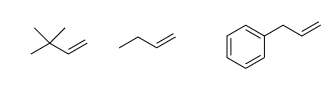

11 juni 2019
- Explain toxicity of compounds and rank them in decreasing toxicity.

- (Given: structure sildenafil and synthetic route both medicinal and commercial) Explain the differences in synthetic approach in medicinal and commercial route to achieve the bond indicated with the arrow. Explain why this is not straightforward and explain why this is (nevertheless) advantageous. (arrow indicates the C=N bond of the pyrimidine, he asks for the amide formation (so Staab's reagent advantages, not cyclization))
- Give the two possible mechanisms of the reaction of epoxide and CO2 to form the cyclic carbonate with LFP's as a catalyst.

13 juni 2018
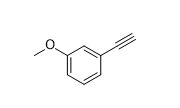
- Why is the following molecule toxic, how can you mitigate its toxicity.
- Talampanel. Synthesis is given explain why more sustainable. Explain the use of the XAD resin and give an alternative.
- What would you choose: biobased or biodegradable polymers. Motivate you answer.

12 juni 2018
- allyl alcohol, how is this toxic and how to modify the structure to make less toxic
- sertralin (slide with tetralone to sertralin) a) why is the assymetric formation of the enantiomerically pure tetralone not used b) compare the reductive amination with the first procedure in terms of sustainability
- cellulose a) why is it a good biobased material b) in which IL's does it dissolve and why c) compare viscose process to il method of dissolving cellulose in terms of sustainability
30 augustus 2017
- Vinyl chloride has some cancerogenic properties, explain where they come from.
- The commercial synthesis of sildenafil is way more sustainable with respect to use of solvents in comparison with the laboratory synthesis. Explain.
- The presence of halogenide ions reduces strongly the applicability of ionic liquids, explain.